Lab instrumentation research
OVERVIEW
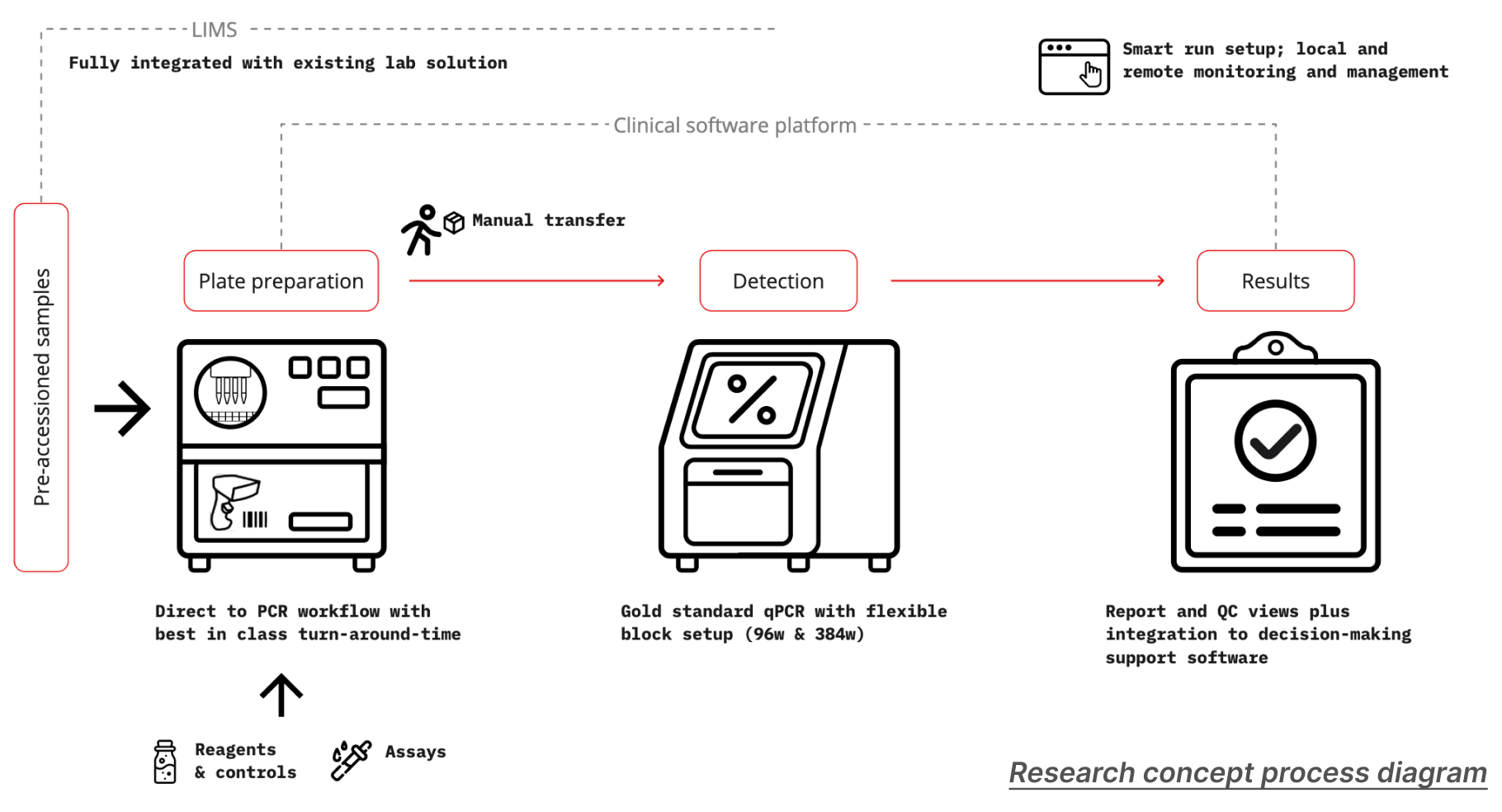
Because of covid, there was a large demand for sample processing to determine who might have the virus. The process consists of lab instruments my company provides, so we wanted to validate a concept that would decrease turn around time of results by adding automation to the process.
My role was to get team alignment and provide the materials we could conduct interviews with. Over the course of three months I would lead team workshops, produce an interview script, and synthesize findings...with more workshops. This project an example of some of the techniques I use to approach a problems and find solutions.
MY PROCESS
The people (scientist & engineers) brought in for the project all brought unique domain expertise around instrumentation, automation, and software. I used an online collaboration tool to facilitate conversations and activities. Depending on the project, my process may consist of problem definition, personas, desired outcomes, goals, challenges, and solutions. For this project we would align around the following...
Problem analysis
This one is always needed. We (myself included) love to jump into solutions before really understanding the problem past face value.
Terminology alignment
Throughout this process I noticed people were using key domain terminology differently, so I paused the group to get alignment around those key terms.
Concept journey & themes
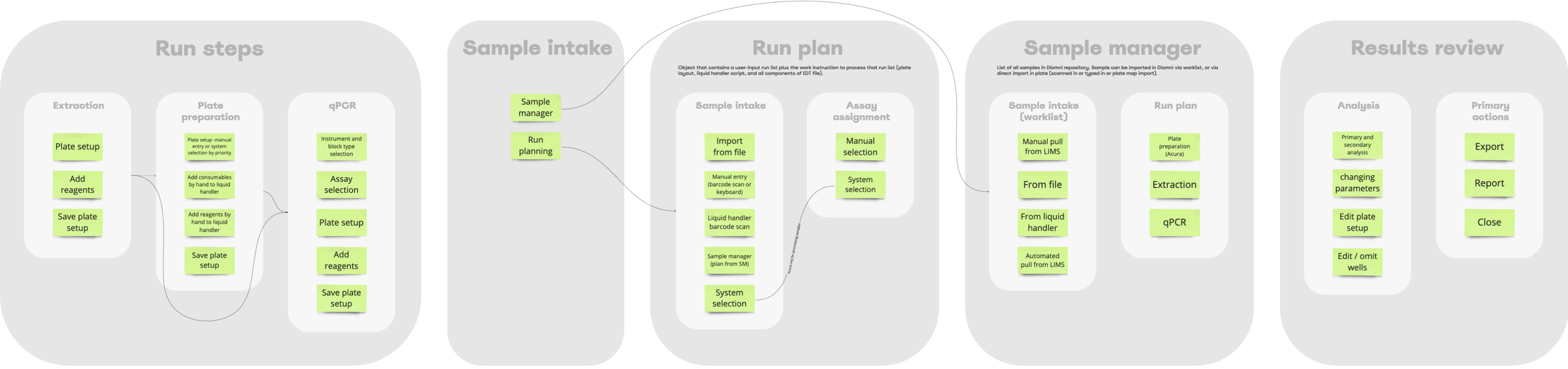
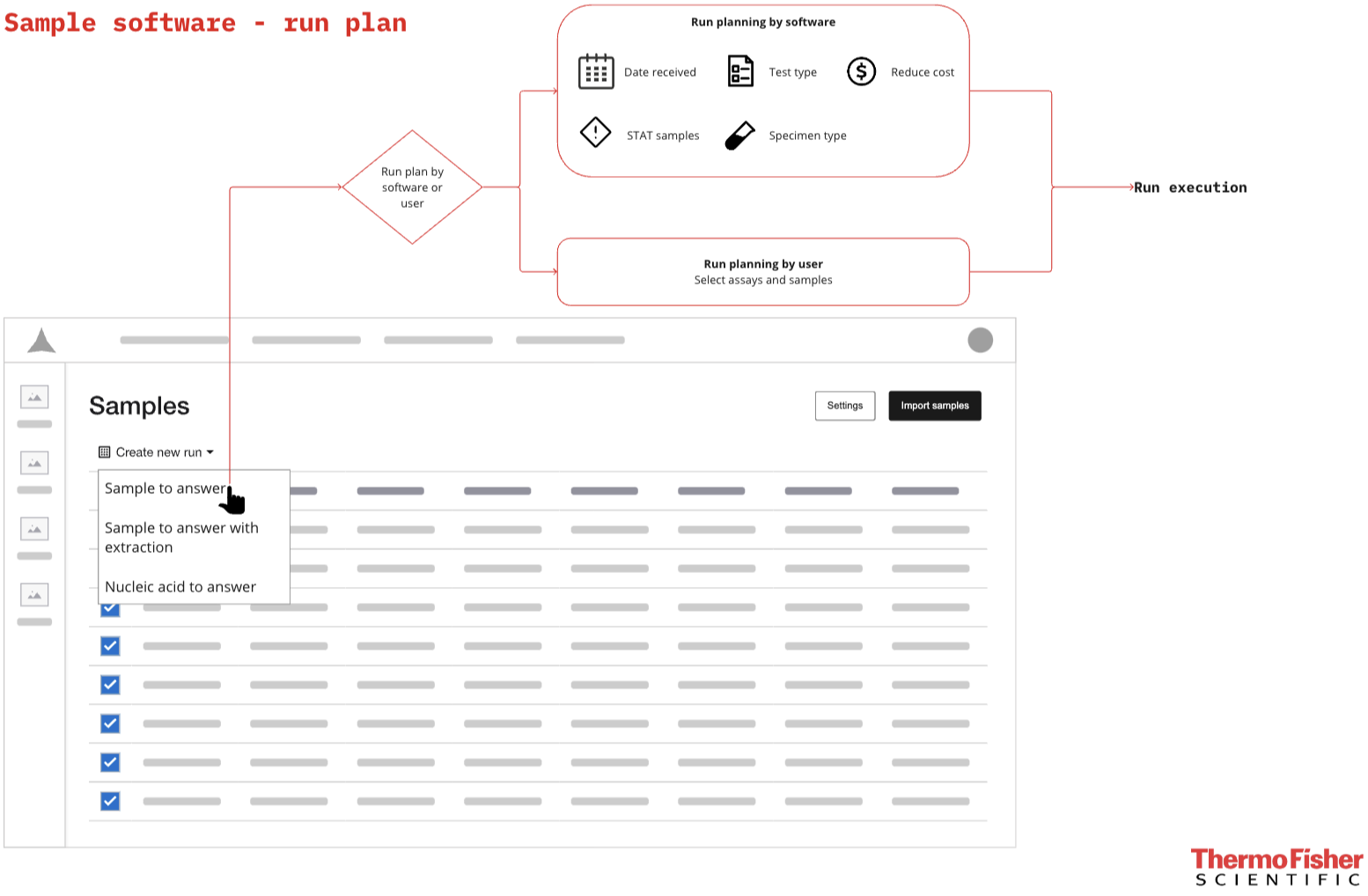
We listed out the sequence of events that needed to take place in order for the concept to work and from this, formed themes we could organize our interview by.
Question formation
I led the group in a series of exercises to determine what we wanted to learn and formed those into the questions we would ask in our interviews.

INTERVIEWS
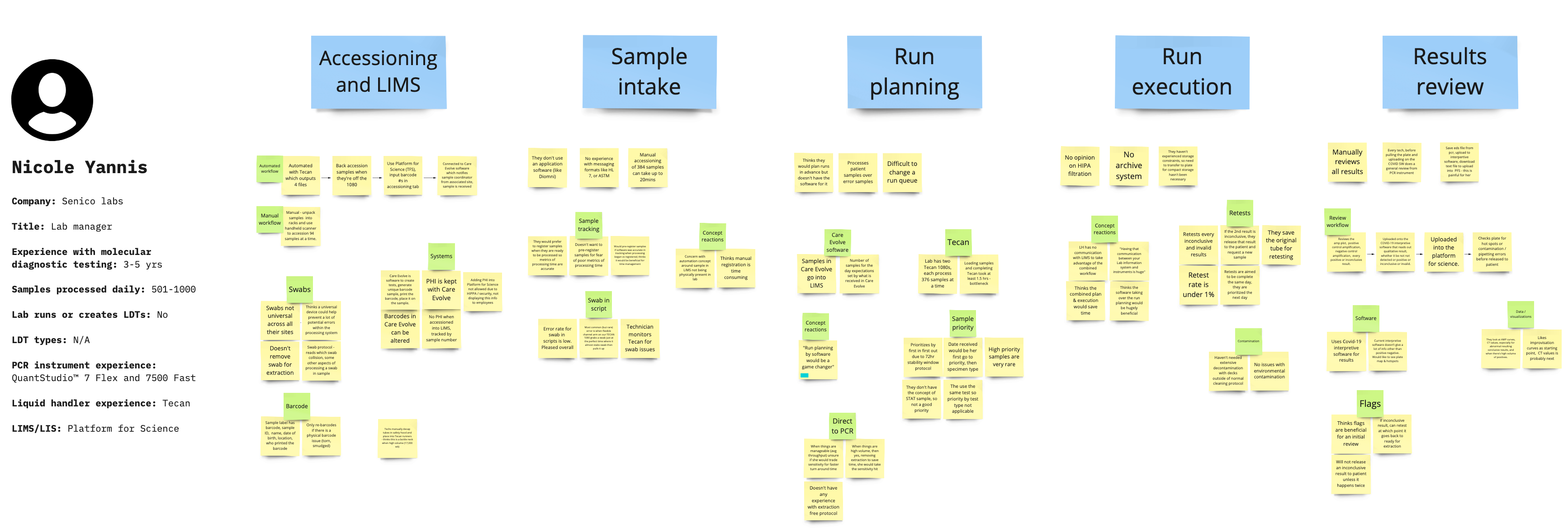
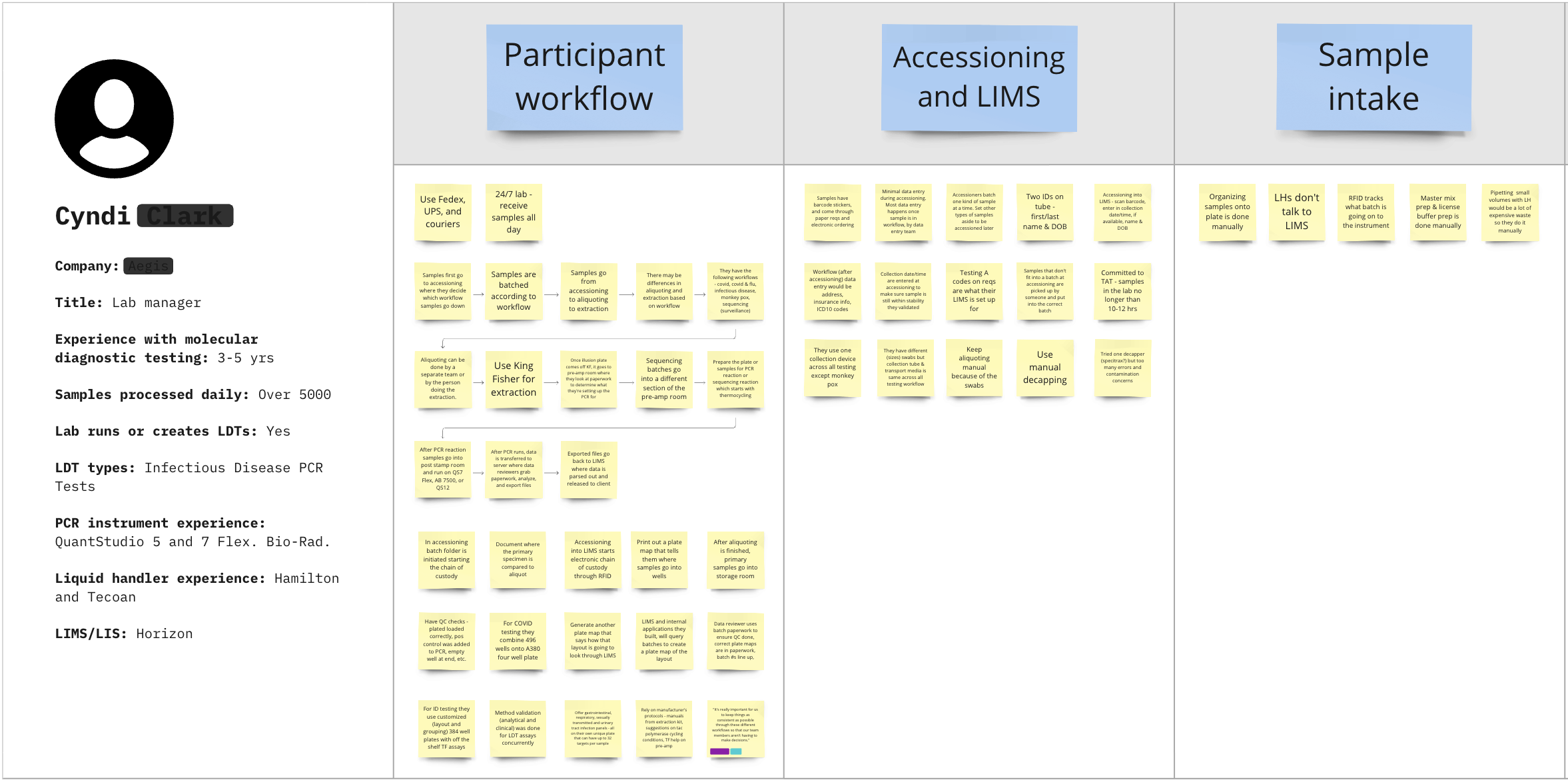
Since the subject matter of the interviews was domain heavy, we decided to let a product manager, who was subject matter expert from our team, conduct the interviews. Research isn't rocket science – ironically some of the people I work with are – so I advised as best I could on dos & don'ts of interviews, and we refined as we went. We successfully conducted eight interviews.
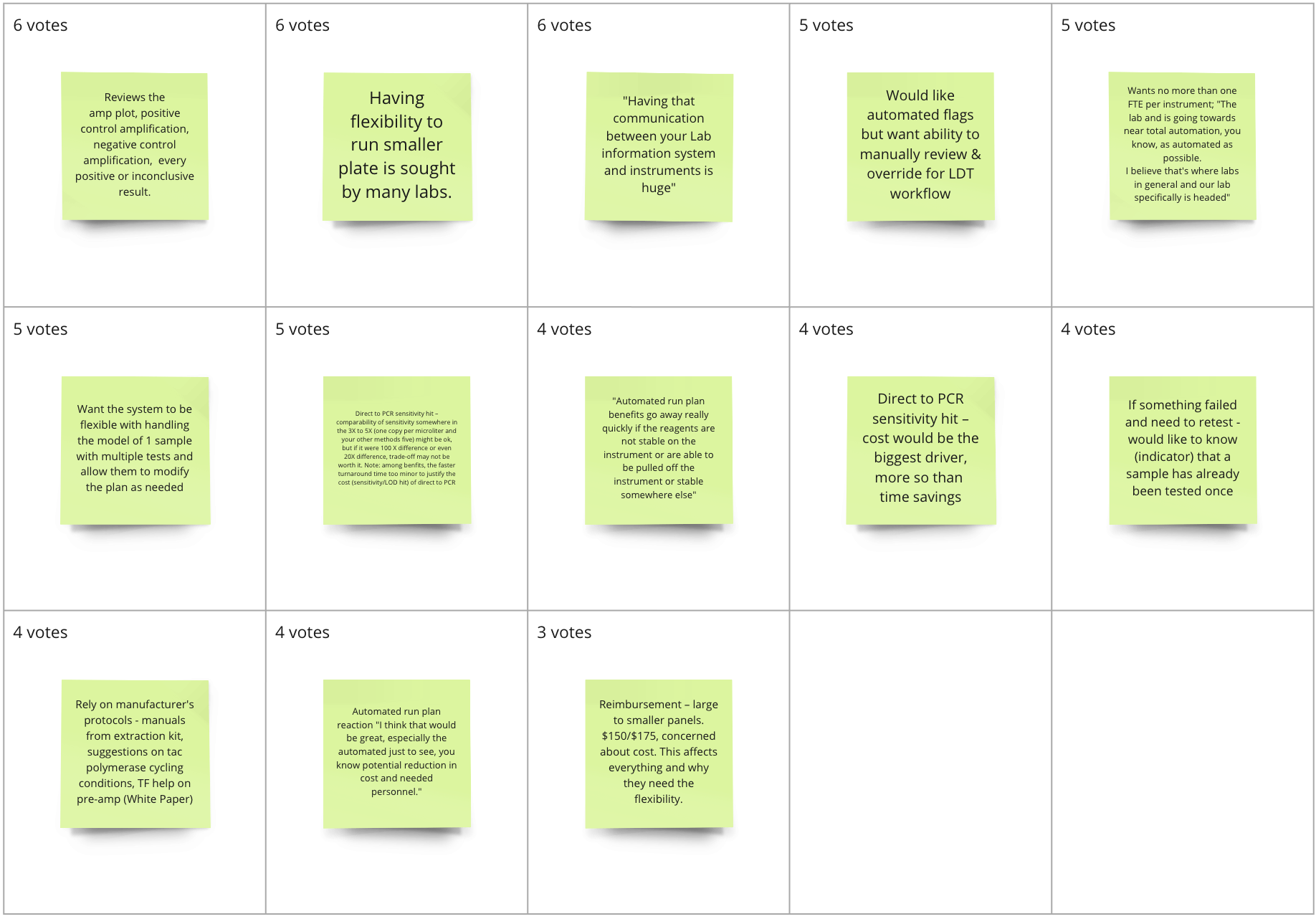
After we conducted our eight interviews we did some affinity diagraming. I then asked the team to select a specific number of sticky notes from the participant note boards with a comment about why it was important. We voted on the notes and captured the top 13 insights.
FINAL THOUGHTS
Many of us hadn't worked together previous to this project so I thought it was a good opportunity to work on my workshopping skills by running everyone through a series of collaborative exercises. Sometimes the documented output of the exercises is secondary to the conversations they spark in order to gain team familiarity. I'm a designer first but I've found that having a more strategic approach to problem solving helps me get closer to designing the right solution.